Quiet Time Activities for Kids Who Don’t Nap (25 Easy Ideas + How to Start)
This post contains Amazon links. As an Amazon Associate we earn from qualifying purchases, and as the authors we earn a royalty on our own books. See our Disclosure.
Your child has stopped napping, but you still need a break in the middle of the day. Sound familiar? Quiet time is the answer for many families: a short, predictable time each afternoon when kids rest their bodies and play calmly on their own while you recharge.
In this guide you will learn how to set up quiet time step by step, how long it should last at each age, what to do when your child refuses, and 25 easy quiet time activities for kids you can put in a simple quiet time box. Most ideas use things you already have at home.
What Is Quiet Time?
Quiet time is a daily rest period for kids who no longer nap, usually after lunch. Your child stays in one calm space, such as their bedroom or a cozy corner, and plays quietly on their own. They do not have to sleep. The goal is rest, calm and independent play, not perfect silence.
How Long Should Quiet Time Last?
| Age | Quiet time length | Tip |
|---|---|---|
| 2–3 years | 15–30 minutes | Start short and stay close by at first. |
| 3–4 years | 30–45 minutes | Use a visual timer so they know when it ends. |
| 4–5 years | 45–60 minutes | Let them choose their activities from a box. |
| 5–8 years | 30–60 minutes | Books, drawing and color by number work well. |
Start with a short time and add five minutes every few days. A successful 15 minutes is better than a stressful hour.
How to Start Quiet Time in 6 Steps
- Pick the same time every day. Right after lunch works for most families because kids are naturally a little tired.
- Choose one quiet spot. A bedroom, a play tent or a reading corner with a pillow and blanket.
- Explain it simply. “This is quiet time. Your body rests, you play quietly, and I will come get you when the timer finishes.”
- Use a visual timer. Kids who cannot tell time understand a color clock or a sand timer.
- Offer a quiet time box. A small box of special activities that only comes out at quiet time.
- End with praise. When the timer goes off, say what went well: “You played so calmly with your coloring book!”
What to Do When Your Child Refuses Quiet Time
- Shorten it: try 10 minutes and build up slowly.
- Stay nearby at first: sit in the room reading your own book for the first few days.
- Make it special: keep the quiet time box only for quiet time so it feels exciting.
- Give a choice: “Do you want the coloring book or the puzzle first?” Choices reduce power struggles.
- Stay calm and consistent: the same routine every day is what makes it stick, usually within one to two weeks.
25 Easy Quiet Time Activities for Kids
Coloring and Drawing
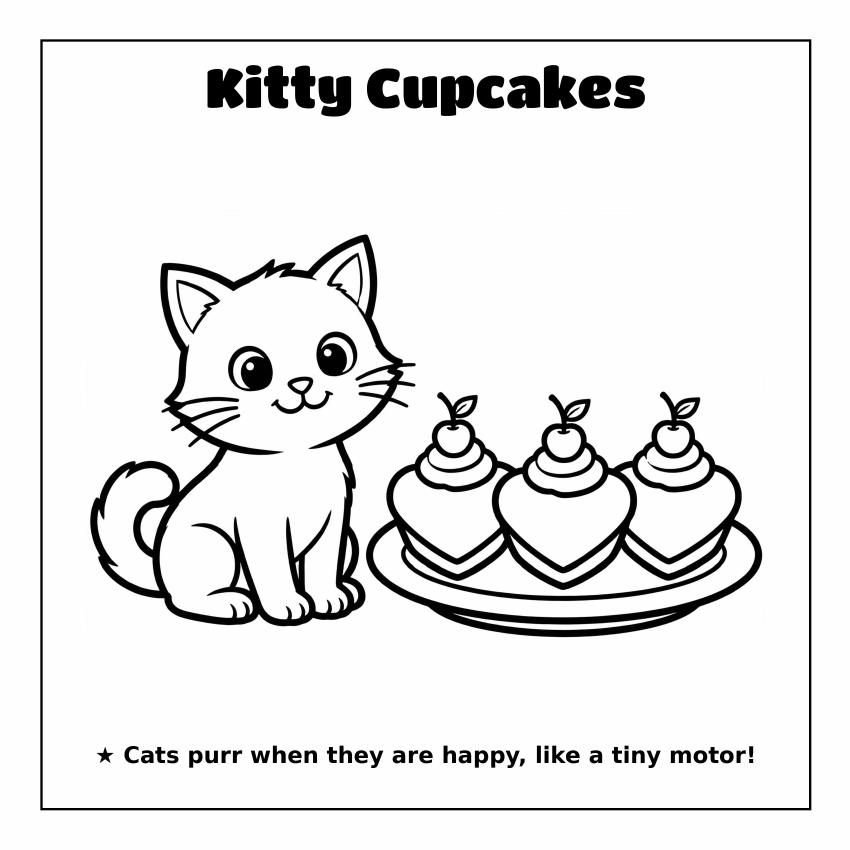
- A coloring book with bold, easy pages that kids can finish on their own
- Color by number pages for a calm little puzzle
- Dot marker pages for toddlers
- A blank sketchbook and colored pencils
- Tracing simple shapes and letters with a dry-erase sleeve
Books and Stories
- Picture books they know well enough to “read” alone
- Audiobooks or calm stories with a simple player
- Look-and-find books
- Sticker activity books
- A photo album of family pictures
Building and Hands-On Play
- Building blocks or magnetic tiles
- Simple jigsaw puzzles
- Playdough with a few cookie cutters
- Lacing cards or big beads (age 3+ with supervision)
- Reusable sticker scenes
Pretend Play
- A small basket of animal figures
- Dolls or stuffed animals for a “tea party”
- A toy car and a road drawn on paper
- Puppets for quiet storytelling
- A mini dress-up box
Calm Sensory Play
- A small tray of kinetic sand
- A sensory bottle with glitter and water (sealed tightly)
- Sorting pom-poms by color into a muffin tin (age 3+)
- A soft blanket fort with a flashlight
- Listening to calm music with eyes closed
Build a Weekly Quiet Time Box
Rotating activities keeps quiet time fresh without buying new things. Use one box and swap three or four items each day:
- Monday: coloring book, crayons, puzzle, picture books
- Tuesday: color by number page, blocks, stuffed animals
- Wednesday: playdough, sticker book, audiobook
- Thursday: dot marker pages, lacing cards, look-and-find book
- Friday: child’s choice from all the boxes
Why Coloring Is a Quiet Time Superstar
Coloring is one of the easiest quiet time activities because kids can do it alone, it naturally slows them down, and it builds hand strength for writing. The key is choosing pages that are easy enough to finish without help. Bold outlines and big spaces mean fewer “I can’t do it” moments.
Our books are made for exactly this. Toddlers love the Dot Marker Activity Book (ages 2–4). Preschoolers enjoy favorite topics like Axolotl, Monster Truck or Unicorn & Princess coloring books. Kids ages 4–8 who like a little challenge do well with Animal Color by Number or Dinosaur Color by Number. See all of them on our Our Books page.
Free Printables for Quiet Time
Want to try before you buy? Download our free printable packs and add a few pages to the quiet time box: 9 free Valentine coloring pages, 4 free Valentine color by number pages and free Christmas coloring pages.
Save This Guide on Pinterest 📌
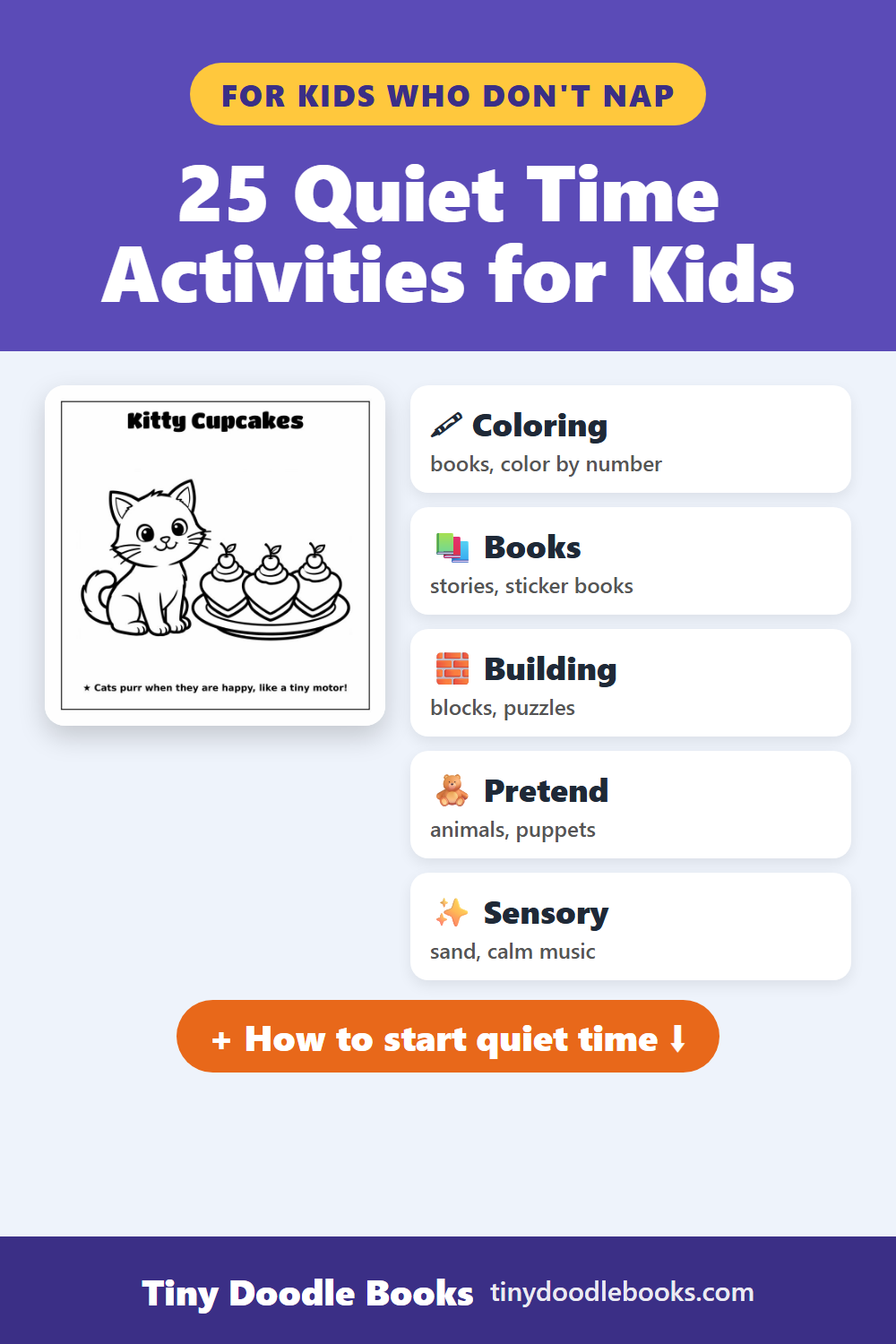
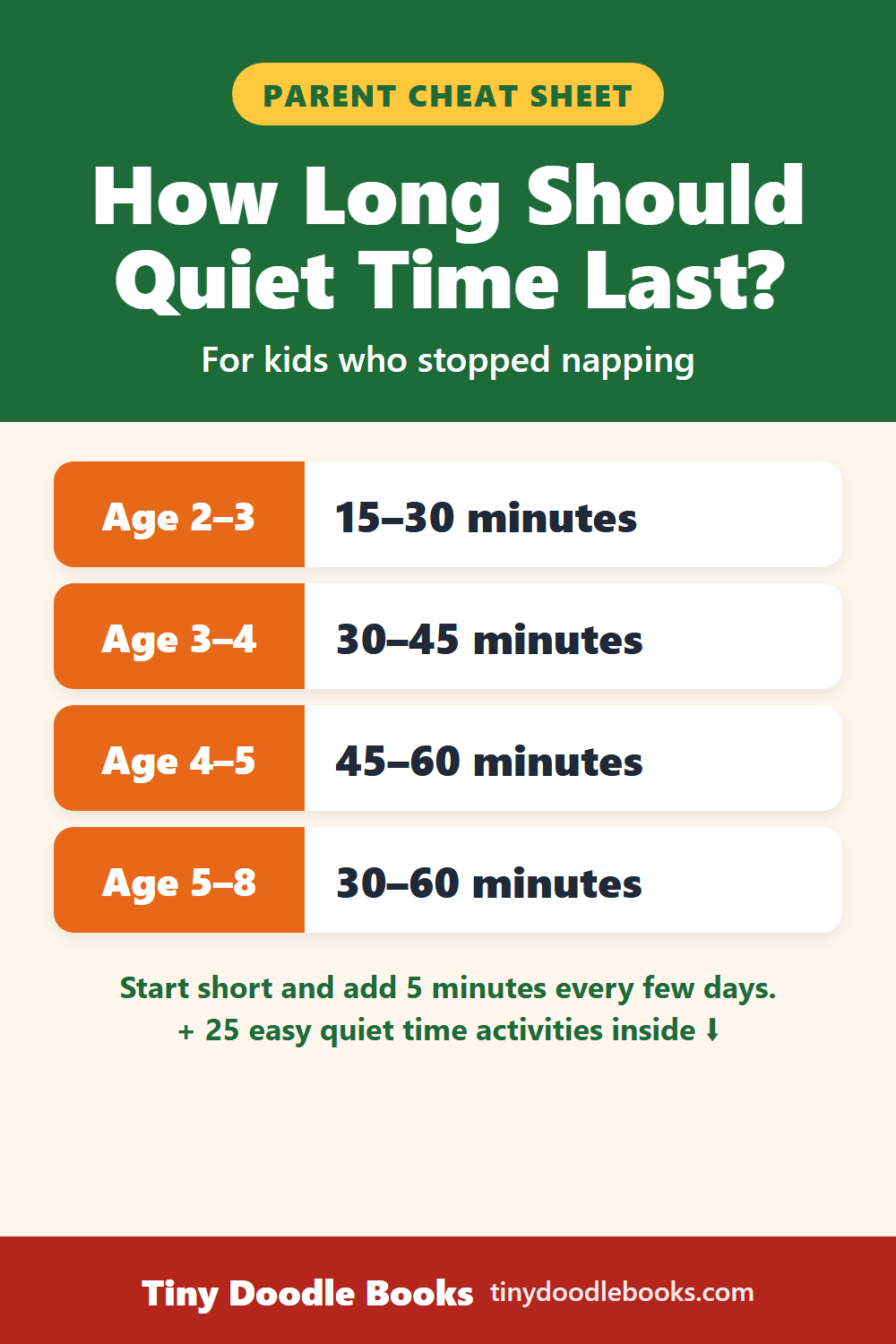
Save one of these images to your parenting board so you can find these quiet time ideas again.
Frequently Asked Questions
At what age do kids stop napping?
Many children drop their nap between ages 3 and 5, but every child is different. Quiet time gives them rest even when they no longer sleep.
Should quiet time be in the bedroom?
It can be, but any calm, safe space works. Some families use a reading corner or a play tent in the living room.
Is screen time okay during quiet time?
Many parents prefer screen-free quiet time so kids practice playing on their own. Audiobooks and calm music are good screen-free options.
What if my child comes out of their room?
Calmly walk them back and remind them the timer is not finished. Starting with a shorter time usually helps.
Final Thoughts
Quiet time is a gift for the whole family: kids get rest and practice playing on their own, and parents get a few precious minutes to breathe. Start small, keep it consistent, fill a box with calm activities like coloring, and you will soon have a peaceful afternoon routine that works.